Specialty materials for advanced automotive interiors
We support automotive manufacturers and Tier suppliers with polymers, films, and composites tailored for demanding interior applications.
We support automotive manufacturers and Tier suppliers with polymers, films, and composites tailored for demanding interior applications.
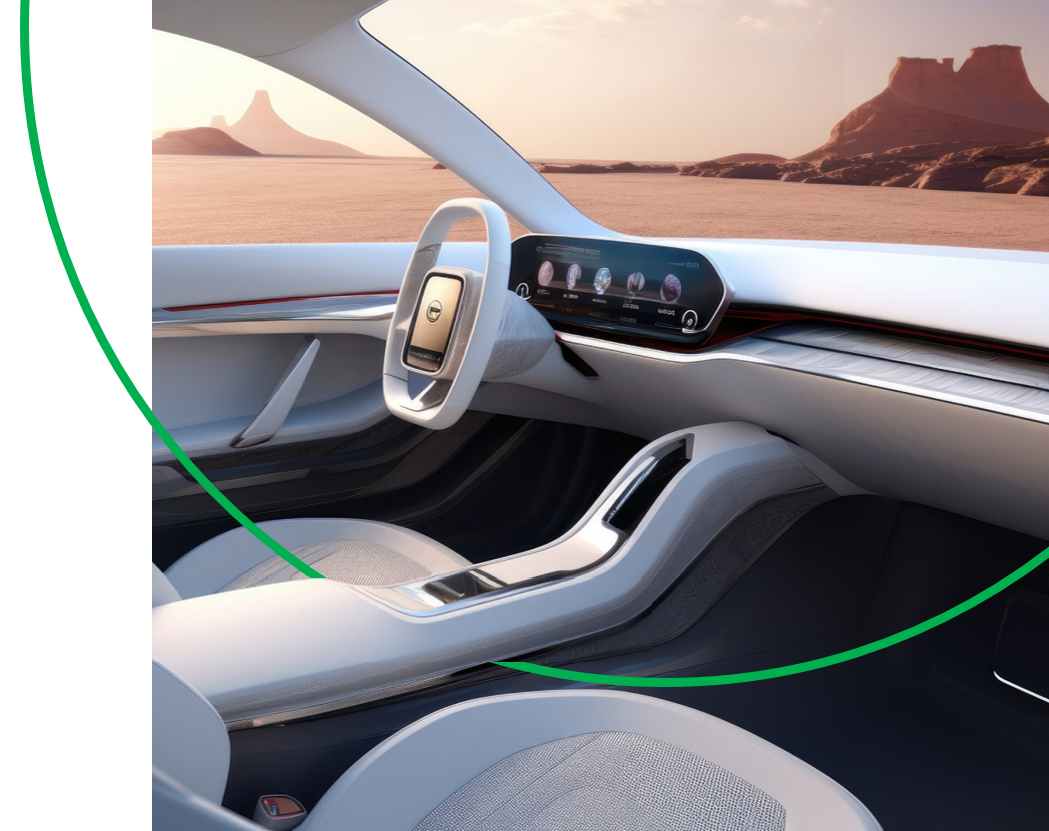
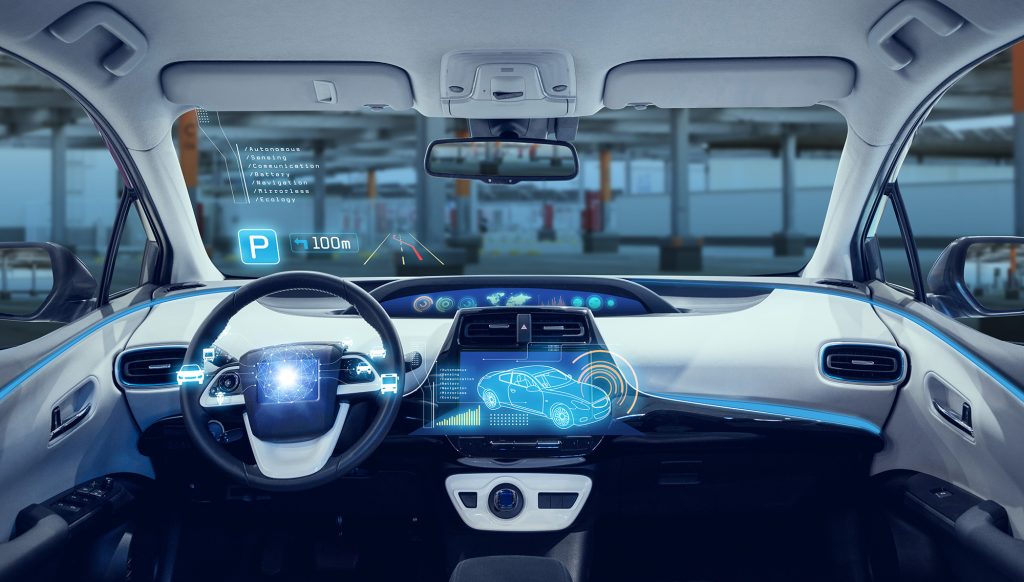
Automotive interior components operate under uniquely demanding conditions at the crossroads of human interaction and environmental exposure. Subject to both aesthetic and performance expectations, materials used in automotive interiors must maintain visual quality and dimensional stability despite UV exposure, temperature cycling, chemical contact, and continuous passenger interaction.
Mitsubishi Chemical Group partners with OEMs and Tier suppliers to address these challenges through advanced polymers, films, and composite technologies engineered specifically for automotive interiors. Our materials aim to enable reliable performance and efficient processing across a wide range of interior systems.
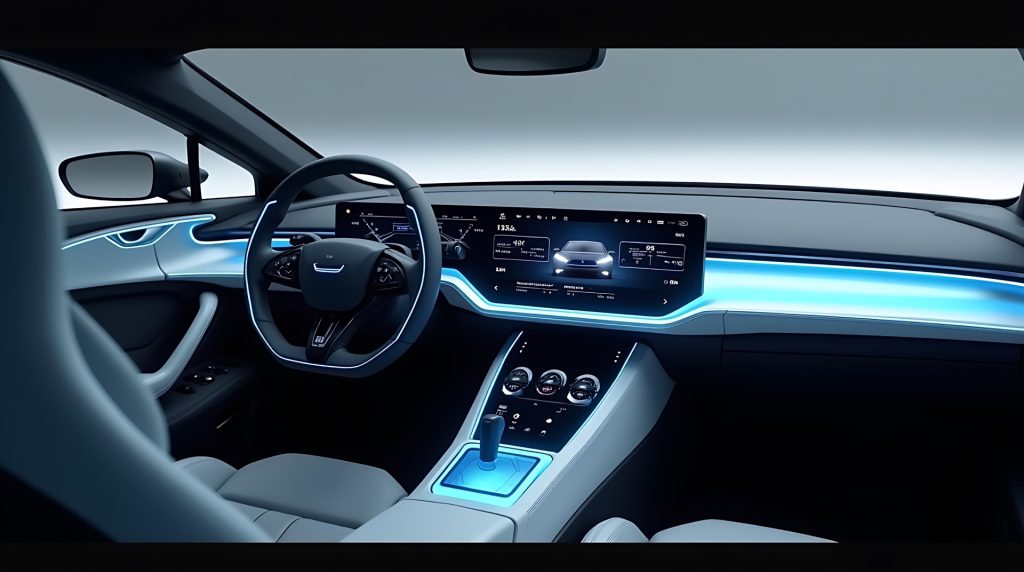
From high-touch user interfaces, to safety-critical components, to structural elements and protective surfaces, Mitsubishi Chemical Group supports interior innovation with a broad portfolio of materials enabling manufacturers to balance design, manufacturability, and performance.
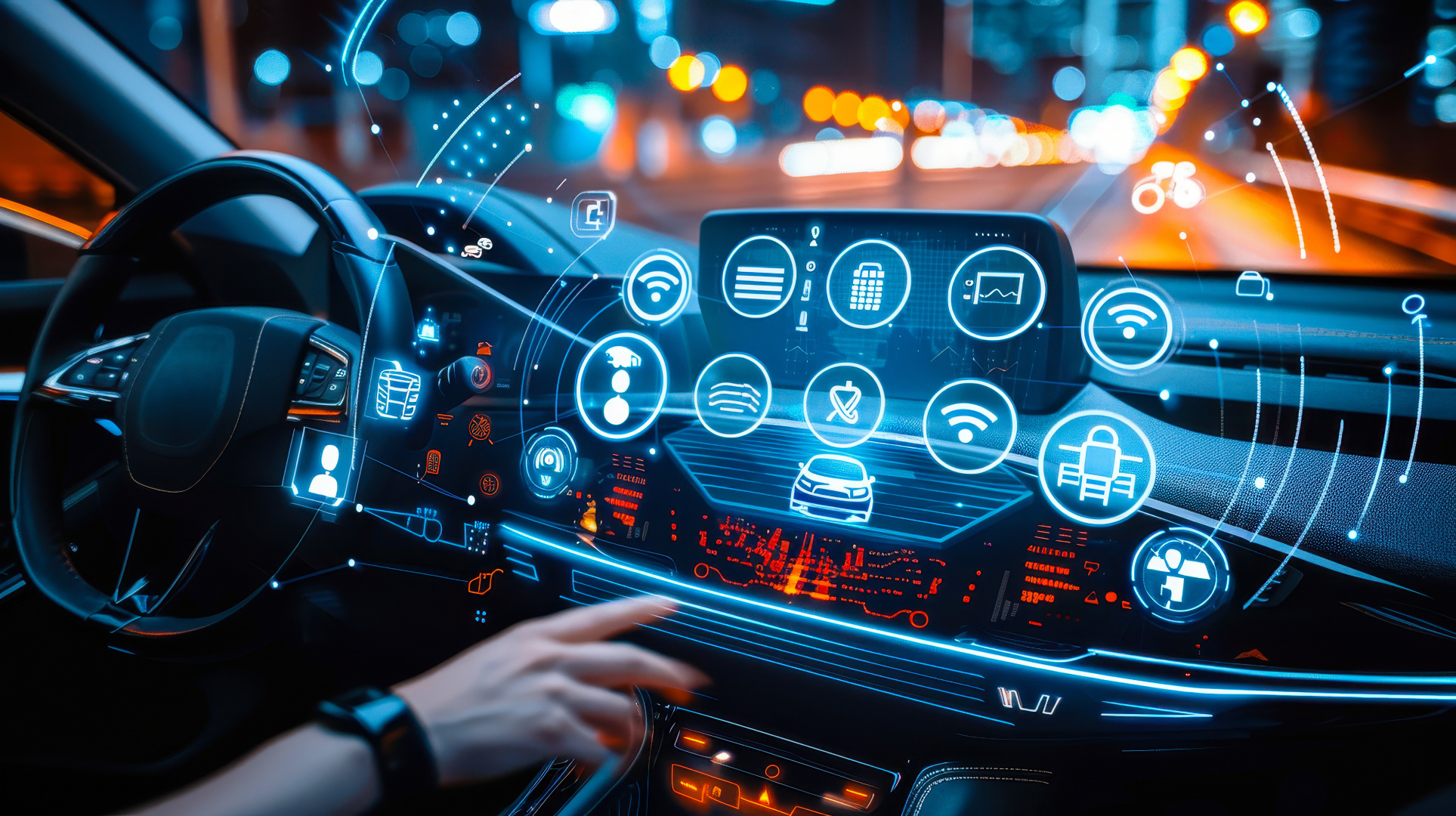
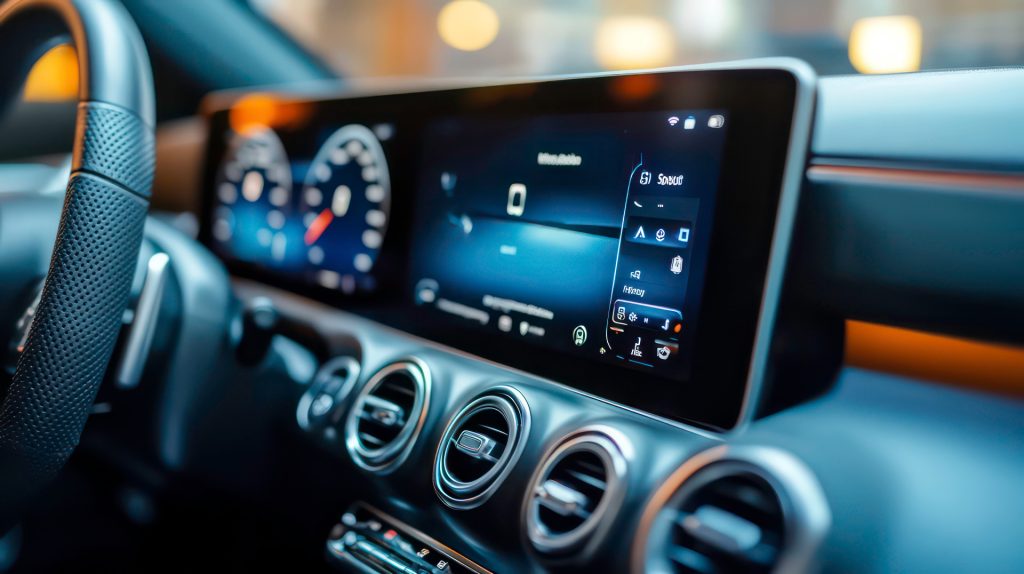
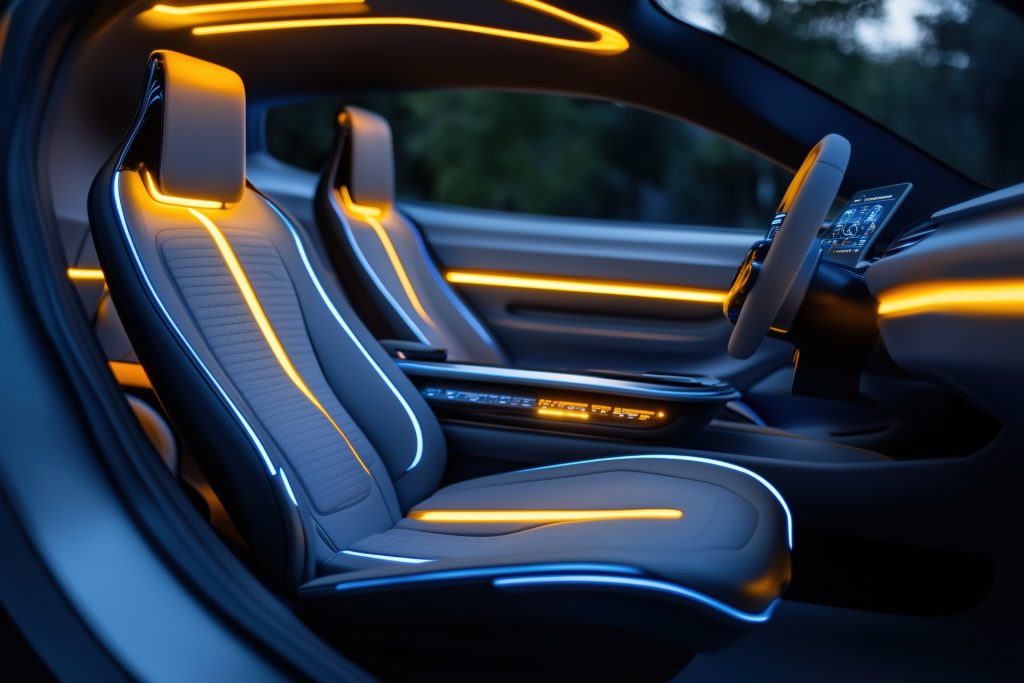
Offering excellent visual quality, touch perception, and scratch resistance, our material solutions for interactive interior components seek to enhance the driving experience by design.
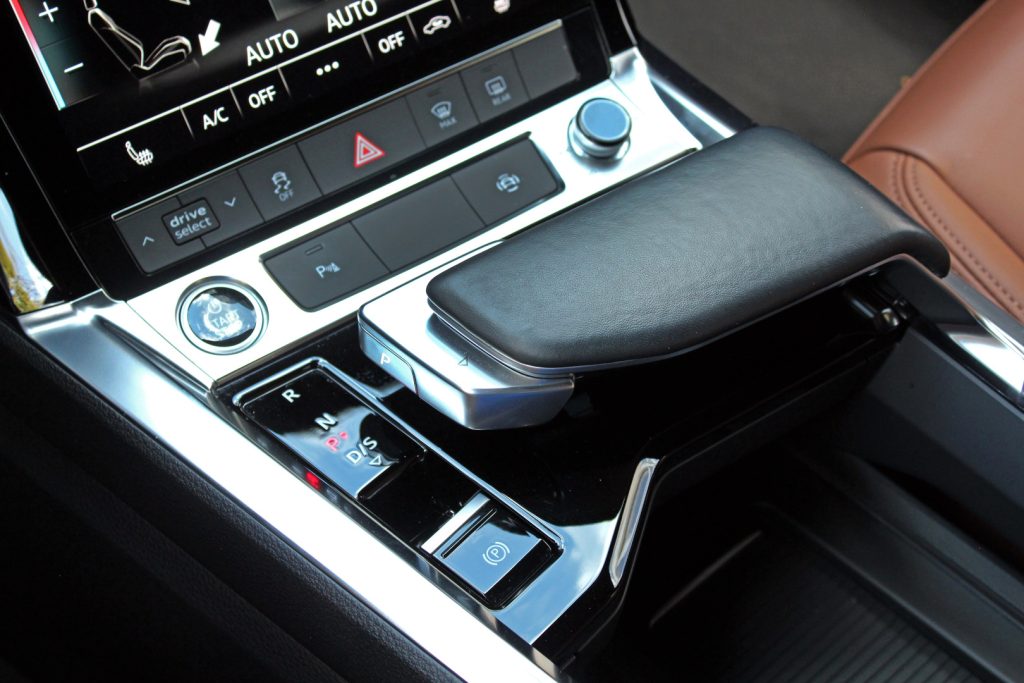
Controls, buttons, and knobs
Specialty polymers for high-touch interfaces and control elements
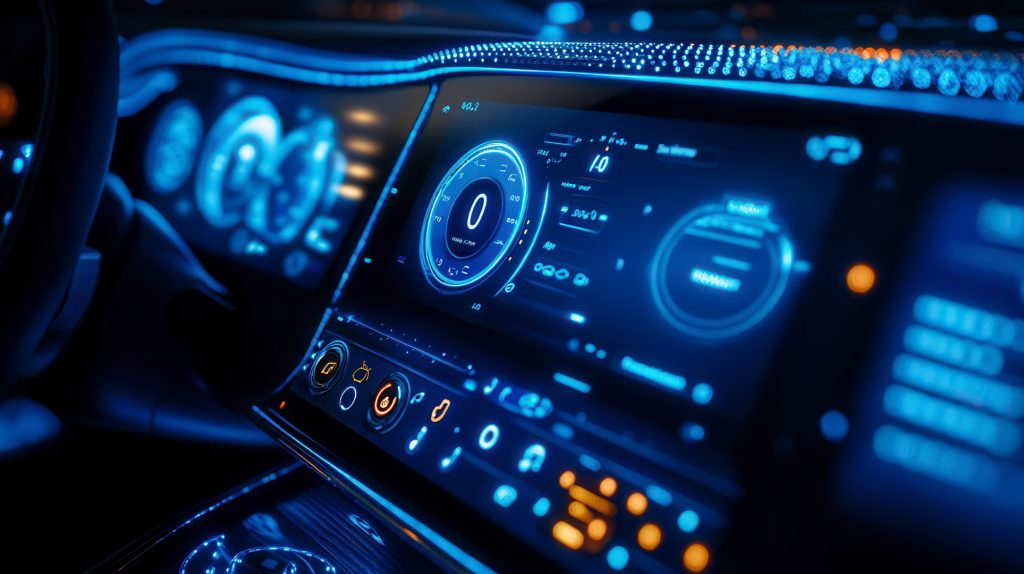
Controls experience some of the most demanding material environments in the vehicle interior applications. They endure continuous user interaction alongside mechanical, thermal, and chemical stress. Buttons, knobs, and switch components must maintain dimensional stability, surface quality, and tactile consistency despite repeated operation, UV exposure, temperature cycling, and contact with skin oils and cleaning agents.
Material selection directly influences haptics, durability, and manufacturing efficiency. Polymers used in control systems should support precise molding of fine geometries, resist wear and gloss change, and enable design features such as soft-touch surfaces, high-gloss finishes, and integrated lighting or symbols.
Featured materials & technologies for buttons, knobs, housings, and surfaces
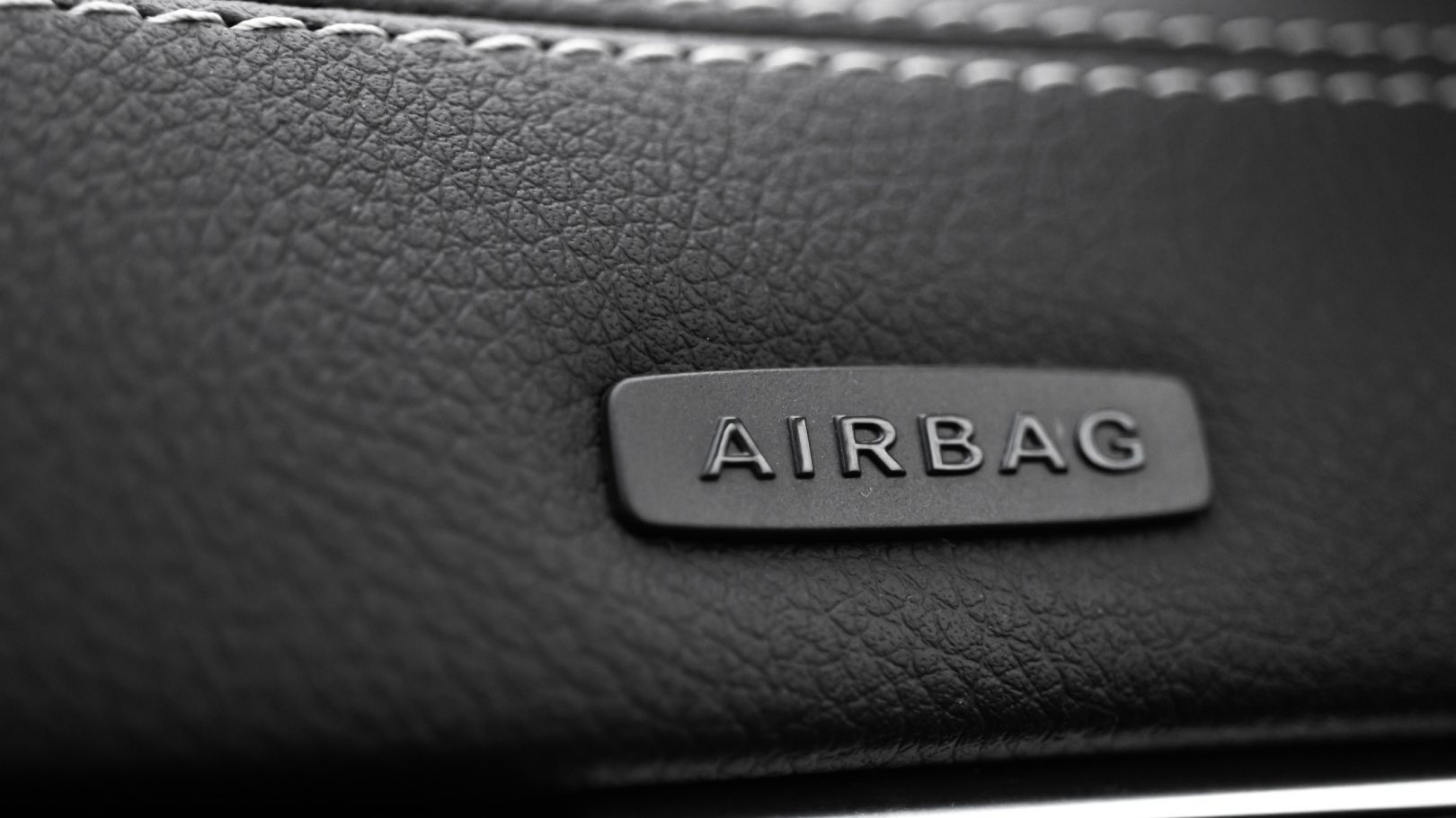
Safety-relevant and functional interior components demand materials engineered for predictable mechanical behavior, energy absorption, dimensional stability, and environmental resistance.
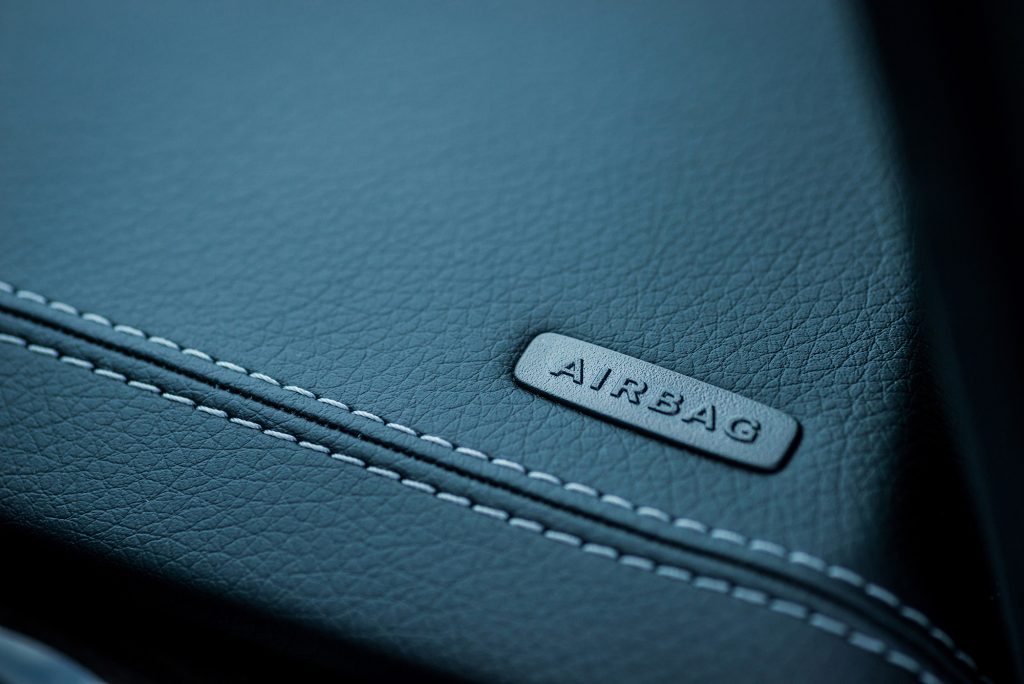
Airbags and crash-relevant interior systems
Highly reliable polymers for occupant protection systems
Airbag components operate under extreme mechanical and thermal conditions, requiring materials that deliver predictable fracture behavior, impact resistance, and long-term stability. Covers, chutes, and deployment housings must maintain structural integrity for years while responding instantaneously and reliably in the event of a crash.
Material selection is critical for balancing toughness, controlled energy absorption, dimensional precision, and compatibility with integrated sensing and triggering systems. Polymers used in airbag modules are designed to also withstand temperature cycling, aging, and processing constraints associated with high-volume automotive manufacturing.
Featured materials & technologies for airbag systems
Our materials enable robust load-bearing structures, energy-damping components, and protective surfaces that contribute to vehicle safety, longevity, and production efficiency.
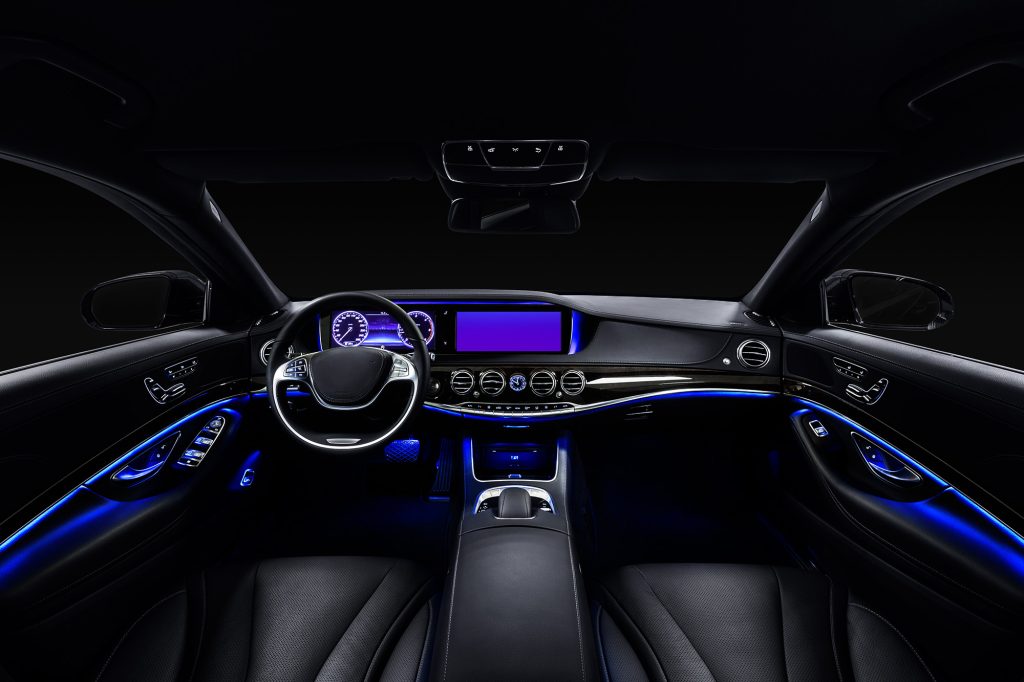
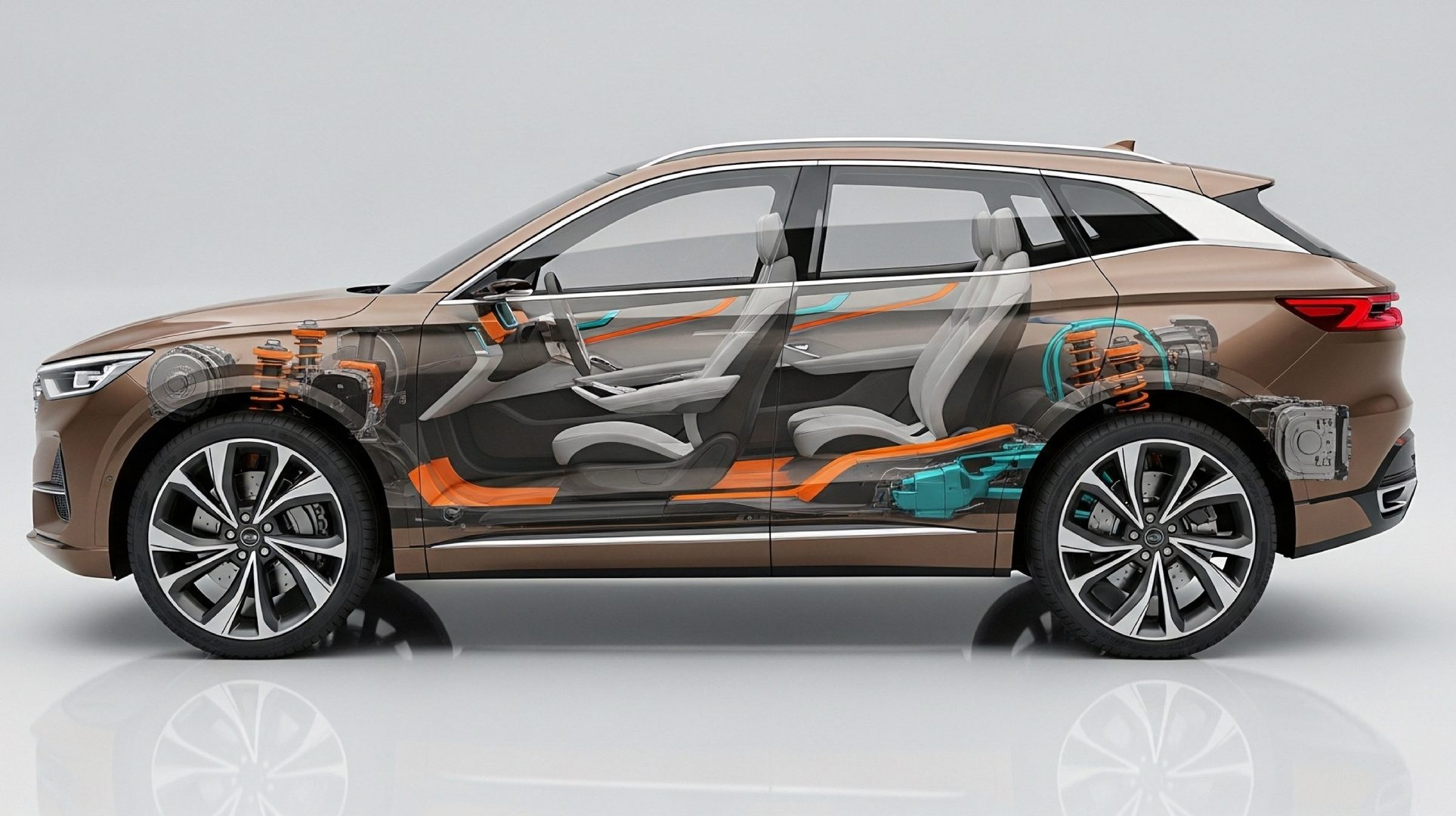
Interior structural components
Lightweight composites and reinforced polymers for load-bearing interior elements
Interior structural parts must balance stiffness, impact resistance, weight reduction, and long-term durability. Components such as carriers, brackets, and reinforcement elements rely on materials that provide predictable mechanical behavior, dimensional stability, and compatibility with high-volume manufacturing processes.
Advanced composite and fiber-reinforced polymer materials enable the replacement of metals, while supporting complex geometries, part consolidation, and improved strength-to-weight ratios.
Featured materials & technologies for interior structures

DURABIO ™ bio-based engineering polymer for high-clarity interior components
DURABIO™ is a plant-derived engineering polymer formulated for applications requiring high transparency, optical precision, and long-term surface durability. Compared with conventional polycarbonate materials, DURABIO™ offers excellent optical properties, strong scratch resistance, and impact performance suitable for demanding automotive interior components.
The material enables high-quality visual finishes and mold-in-color designs while maintaining the mechanical stability and light resistance required for extended product lifecycles. As a bio-based engineering plastic, DURABIO™ supports interior innovations requiring a combination of aesthetics, sustainability, and material performance.
Working together, we can realize a sustainable vision for the future of automotive mobility that benefits us all. See how Mitsubishi Chemical Group collaborates with automotive OEMs and Tier suppliers, applying deep scientific expertise to support the development of next-generation solutions that are paving the way for better mobility for all.